Sid Meierã¢â‚¬â„¢s Civilizationã‚â® Vi Rise and Fall Review

I accept this feeling that no one is really any good at playing Civilization. There probably is someone, sure, simply information technology feels similar there isn't. I definitely don't know anyone who's whatever good, and the people who I know to be not-so-good at Civ only seem to know other people who are also not-so-good at Civ.
The more I recollect virtually that the more I realise it's probably the indicate. To play Civilization is to constantly bounciness betwixt knowing exactly what y'all're doing and having no idea what you're doing. A lot of the time it's both mixed together - I know I demand to be building cavalry, because I'1000 going for a military victory with Genghis Khan so I know cavalry are skillful, but when should I be building them? Should I be worrying about growing my Production kickoff so I tin churn them out faster? And what about Science - if the state of war goes on for long enough I can't hazard getting left behind in the artillery race, so when do I start thinking about that?
With time, that dubiousness inevitably starts to fade. The more you play, the more y'all learn about build orders and min-maxing and optimisation in its many, many forms. Become your cavalry out early and the Product will come up from your Encampment buildings, and Scientific discipline from citizens of the Civs you conquer.
It means that things brainstorm to fall into identify. The earth shrinks, to put it in very Civilization terms. The more than yous play the more the possibilities fade, and you accomplish your own version of the Enlightenment that reveals the truth, and eliminates the mystery. The omnipotent deities that we looked to for answers - that nosotros feel like when we're getting correct - get this dwindling God of the Gaps, and the joy of discovery can only exist in the fewer and fewer places we oasis't already mapped out and written down and posted to Reddit.
That'due south part of the game - part of it's sort of meta-cycle, in a way, that progresses as you spend time with it. Just as maps are revealed and resource uncovered as you lot hurtle through the ages, so are strategies devised and commencement-x or -20 turns decided in advance. It'south all the same fun - finally figuring out the ultimate Leader-Trait-Policy-Wonder combo is its own kind of late-game ability fantasy. I'1000 a powerhouse of efficacy, similar my Culture is a powerhouse of my intelligent design.
But you do start to miss the mystery, and then the Enlightenment is the sickness to which Civilization 6'southward Ascent and Fall expansion is, I retrieve, a wonderful cure.
Information technology's a simple fix, in a way - with Rise and Autumn there is now just lots of new stuff. But that new stuff is also brilliantly devised. A range of new leaders is a major role of that. I'd normally say it'due south the least exciting role of an expansion like this because it doesn't really modify anything cloth in the game - new leaders alone unremarkably don't mess with the underlying mechanics, or force y'all to think most something new - but Rise and Fall'southward roster is an exception, and in fact it'southward exceptional.
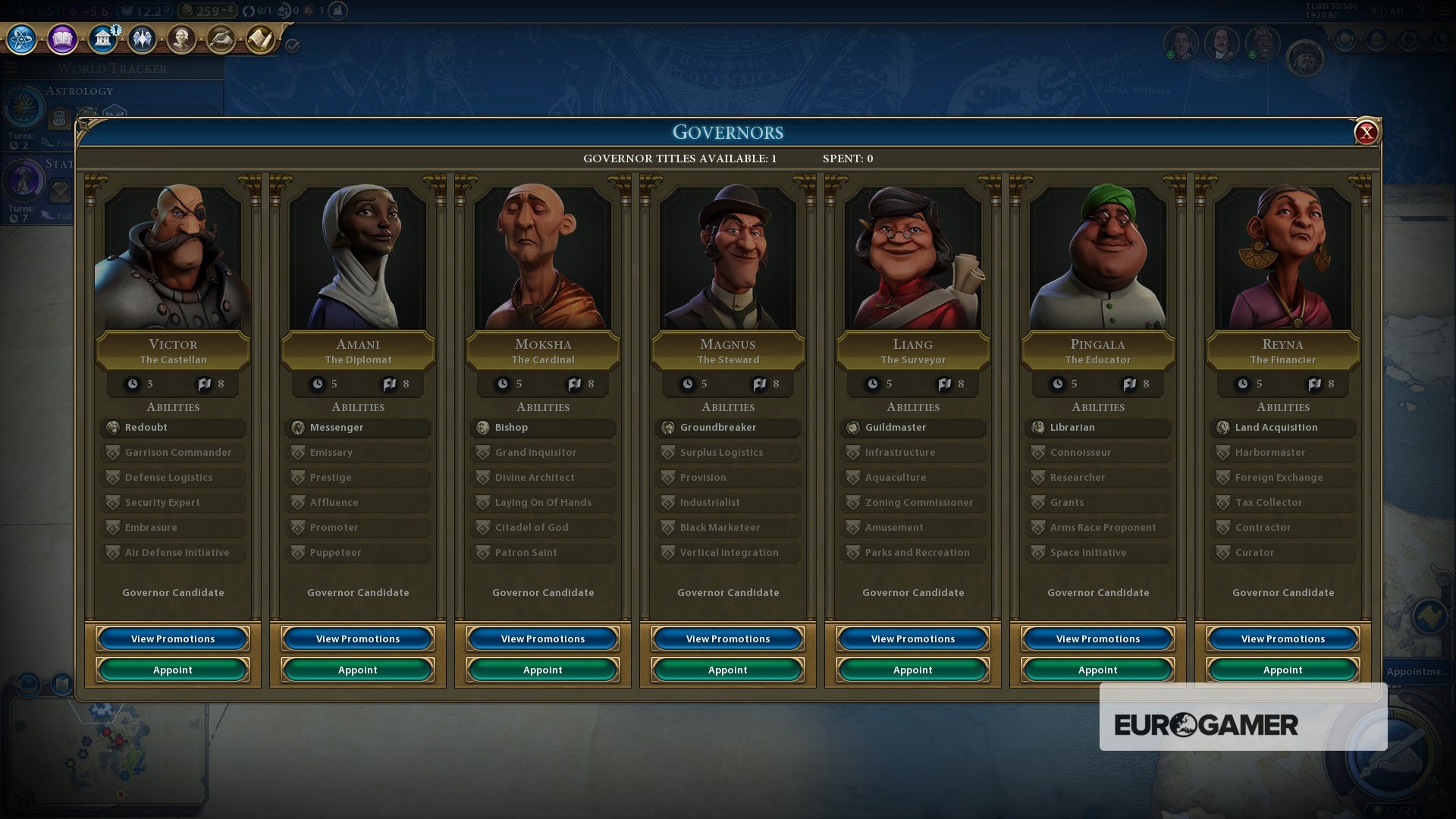
The new leaders are so good because they're and so distinct. Rise and Fall, at times, feels like the shackles have come off, and the team at Firaxis can finally play effectually a flake, and it shows. In vanilla Civ the most instantly recognisable leader is universally known to exist Gandhi. Purveyor of peace but too wildly nuke-happy in the tardily game, Gandhi is a graphic symbol. There are a handful of others that stand out in regular Civilization 6, like Russia's Peter, and Kingdom of spain's Philip II, but Rise and Autumn'due south nine new leaders - at least in my experience and so far - are almost all Gandhis. Maybe they're not and so comically conflicted in policy but they're absolutely their own in terms of way - there's an idea, a philosophy, or only a singular motivation to each, and it shows - liberation for the Mapuche (and a wonderful real-globe necktie-in between Lautaro and Philip Two'south conquistadors that you should absolutely read into), or diplomacy for the Cree.
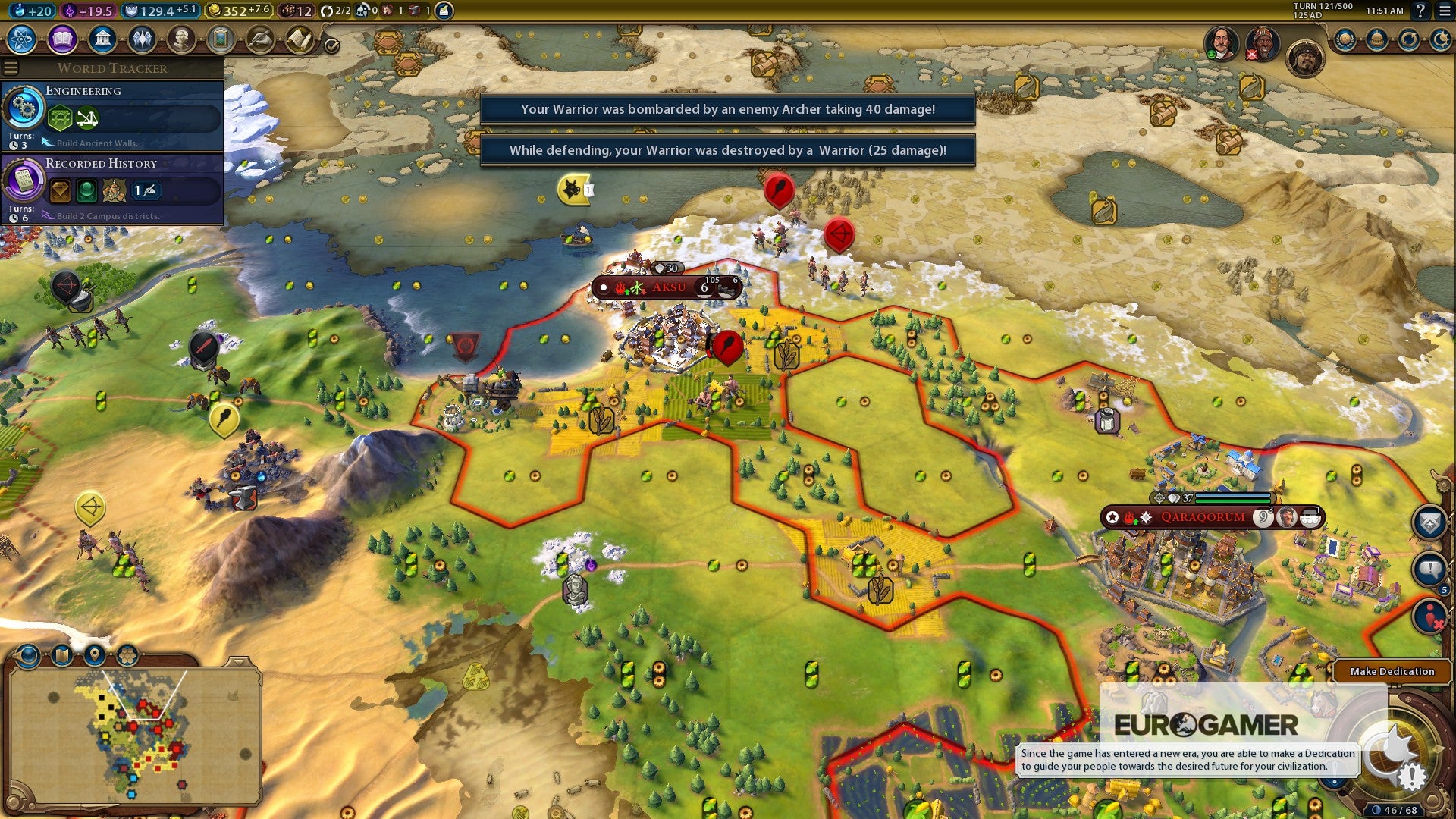
My longest playthrough so far has been with the aforementioned Genghis Khan, and while his particular way of going nearly things is a bit obvious, it'due south the way his traits tie together, like many of the new Leaders, that makes it feel and so distinct: trading with whatever other city immediately puts a Trading Post at the destination; Trading Posts increment your diplomatic visibility with that location's Civ; and increased diplomatic visibility translates into increased military effectiveness. So you merchandise with someone for a bit of aureate, spend it on units, and so you throw a dozen early-game horsemen at them - which have a chance of converting enemy cavalry themselves - and all of a sudden the Mongolian horde is rolling.
Okay, that's a fairly simple example, and there are some concerns already making their mode through the community about certain specially well-synergised new Leaders - namely the new Science-boosting Seondeok of Korea - and how they might exist a little too easy to get going, but they're still identifiable, and memorable, and when you think about these characters and that fact that they all played a monumental role in shaping their nation's identity in the real world, and much of the context of the earth in which we now alive, ultimately that'southward got to exist the betoken.
All that lovely synergy tin, admittedly, sound a lot similar the predictability and efficiency that I've lamented, that this expansion is supposed to fix - merely the new Leaders are but actually a small role of the expansion. The real headline stuff is the three new systems - which actually work together as one big system - in the form of Loyalty, Governors and Cracking Ages.
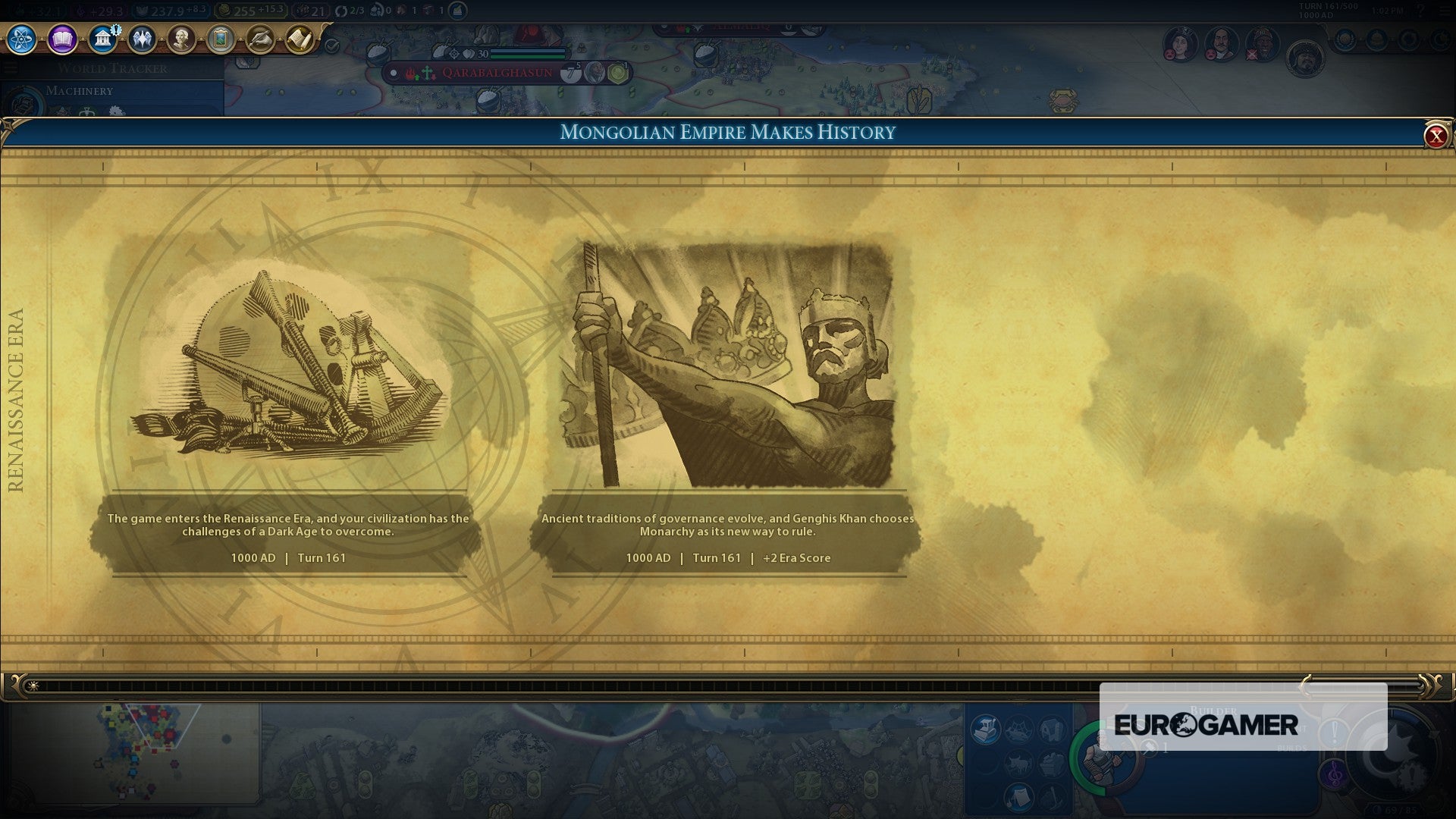
Great Ages bring dorsum Gilded Ages - yes, Civ 6 really didn't have Golden Ages in it from the off, I know - but now in a far more complex, nuanced mechanic that also introduces Dark Ages and Heroic Ages to the mix. To earn a Golden Age you need to gain a sure number of Era Points before the world moves from i to the next, like the Classical Era to the Medieval Era. If you don't earn enough for a Golden Age you just go a normal age, and if yous don't earn enough for that, you'll autumn into a Dark Historic period - successfully propel yourself out of that into the Golden Age bracket though and you'll earn a special Heroic Age. Each has their benefits - even the dreaded Dark Age, thanks to some unique Policies that significantly boost one thing at the cost of some other, similar launching the Inquisition to boost religion at the cost of scientific progress.
The benefits of a Gilded or Heroic Historic period, and the costs of a Nighttime Age, combined with the fact that Era Points are earned for all manner of achievements like discovering Wonders or defeating Barbarians - the moment-to-moment stuff that tin can get a little dry if you've been playing Civ for a while - means that it's constantly at the back of your listen. You can imagine the tension - and in my first game I experienced all four in a row, so I can vouch for it - and it completely shifts how you lot call back well-nigh a game. All of a sudden yous don't just want to shell someone to constructing a Wonder for its ain benefits - you need it for that terminal four points that stop you slipping into a Nighttime Age.
And that's where information technology ties in smartly with the other systems, because Dark Ages cause a drop in your cities' Loyalty - they tin can now insubordinate against you, or even be converted to another Civ - and Gilt Ages boost it. Governors, which are earned like Envoys and placed in specific Cities to give them unique bonuses of their ain, also touch on Loyalty. Some are built around it, similar the Diplomat, whilst the others simply add a passive boost to it with their presence.
Smart use of a Governor could run across you tip a crucial enemy urban center into rebellion, then you can dive in with troops - or just your own Civ's diplomatic influence - to merits information technology for your own. The Governors themselves can also drastically change how you play the game, with new possible combos to strike with their usage that aid Trade Routes and Commercial Hubs, say, or grant new means to grow the smaller cities you lot might have spawned later in the game.
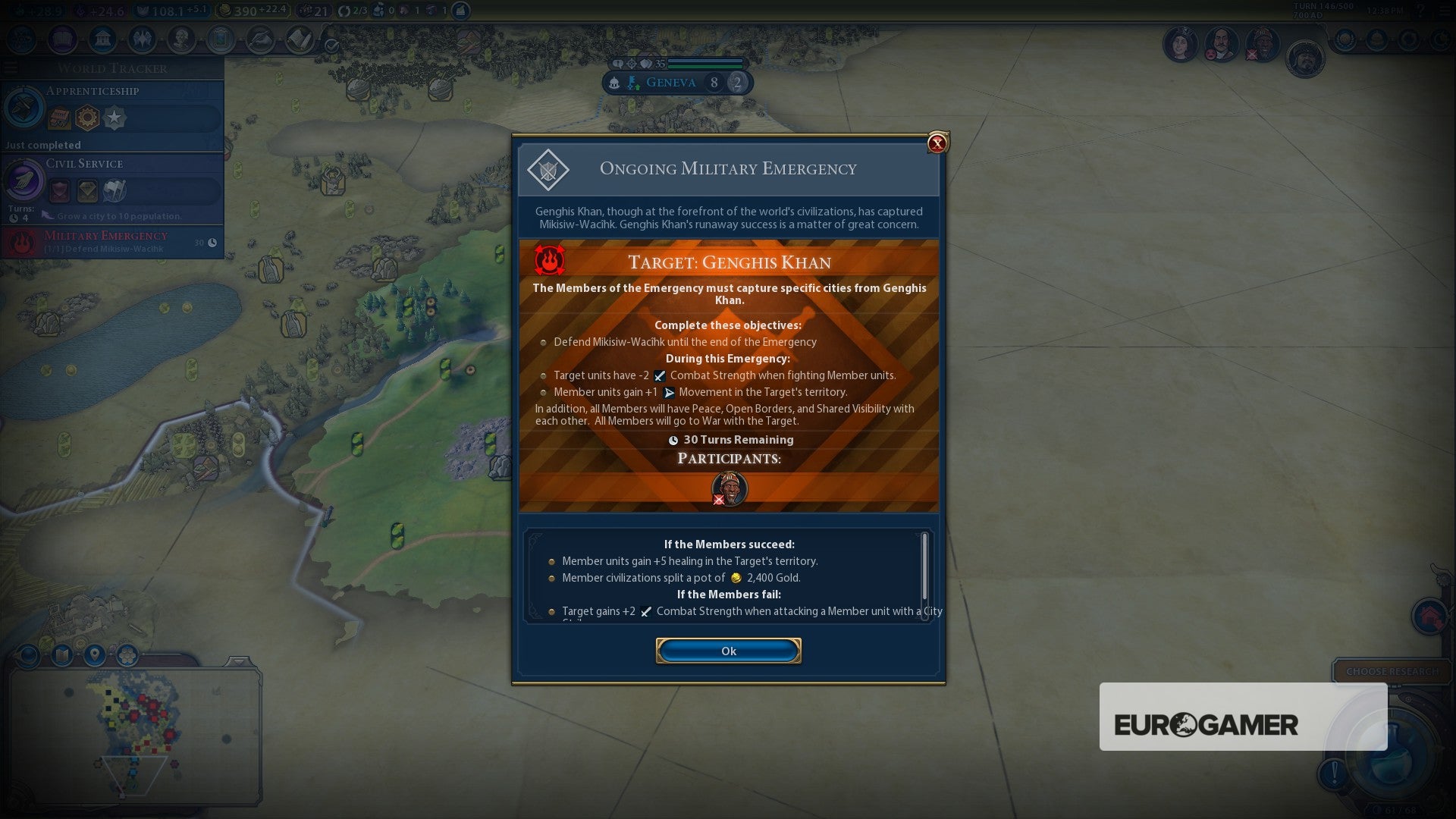
A few other, more banal but every bit important community complaints are addressed in their ain means with the expansion too. The AI - which volition always be a bit weird and irrational in a 4X game similar Civ considering, for one, that's just how humans piece of work - makes a little more sense thanks to a spate of new Agendas - some genius in their predictability and some every bit so for the opposite reason, which I shan't spoil - and the knock-on effects of a Loyalty system that means aggressive forrad-settling, where the AI would often pop up cities correct on your borders earlier you got a take a chance to expand, is deterred by the fact they'll probably catechumen to your own Civ considering of its proximity. Then there's the new Emergency Brotherhood arrangement that will popular up when someone gets a flake likewise Alexander the Great, giving yous a risk to bounce back from defeat or consolidate a lead.
The overwhelming sense from all of this is that here are just all manner of new factors to consider, new mountains of optimisation to mine and explore, and it's exactly what Civilization 6 needs. It can feel like pure chaos at times, like they should have called it Back and Forth, rather than Ascent and Fall, and information technology's all going a fleck haywire and making yous wonder if you lot're actually a smart enough human being to exist playing this game at all, similar information technology must be made for someone else. But so, inevitably, it swings back the other fashion, and you nick a city, or push button back against that Emergency Brotherhood for a huge reward, or fifty-fifty only scrape your fashion into a regular Historic period to go along your head above the water, and you're back to feeling like a that mysterious, all-acquisition deity one time again. Rise and Fall is at times complicated and messy, a wilderness, that'due south the perfect compliment to besides much Civilisation.
Source: https://www.eurogamer.net/civilization-6-rise-and-fall-review
0 Response to "Sid Meierã¢â‚¬â„¢s Civilizationã‚â® Vi Rise and Fall Review"
Post a Comment